[The following notes were generated by Mark Slivkoff, PhD]
IAMSE Webinar Series, Winter 2019
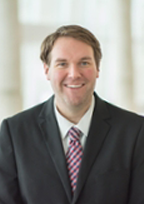
Speaker: Daniel P. Harrington, M.D.
Interim Dean
Virginia Tech Carilion School of Medicine
Title: The Learning Environment System and Case Studies
Series: The Learning Environment in Health Sciences Education
Dr. Harrington initially presented the viewers with a list of objectives:
- Development of Learning Environment in a new medical school
- Review LCME Element 3.5
- Review the development of the Learning Environment program at VTCSOM
- Describe the Learning Environment Advocacy Committee
- Review the examples of concerns registered with the committee
- Describe the periodic review of the LE in the VTCSOM and affiliates
- Review the clerkship year LE
Some Background: The Virginia Tech Carilion School of Medicine
- VTCSOM was founded in 2008 as a public-private partnership between Virginia Tech and Carilion Clinic
- VTCSOM is the smallest medical school in the country with 42 student/class and 168 total students
- Innovative curriculum with 4 domains – Basic Science, Clinical Science, Research and Interprofessionalism integrated across the 4 years
- The curriculum in the first two years is centered on Problem Based Learning
- As of July 1, 2018 VTCSOM became the 9th college of Virginia Tech
- VTCSOM receives over 4,000 application for 42 positions
- The Multiple Mini Interview is used to rank 300+ interviewees for 42 positions
- Of the 5 graduating classes, all students have USMLE Step 1 and 2 scores above the national mean
- Students comment that the intimacy of the small classes, rigorous research requirement, and close relationship to Carilion Clinic are elements that make the school successful
- All 5 graduating classes have 100% MATCH
LCME Element 3.5 Review: The Learning Environment/Professionalism
“A medical school ensures that the learning environment of its medical education program is conducive to the ongoing development of explicit and appropriate professional behaviors in its medical students, faculty, and staff at all locations and is one in which all individuals are treated with respect. The medical school and its clinical affiliates share the responsibility for periodic evaluation of the learning environment in order to identify positive and negative influences on the maintenance of professional standards, develop and conduct appropriate strategies to enhance positive and mitigate negative influences, and identify and promptly correct violations of professional standards.”
Development of a Learning Environment Program
- VTCSOM did not have a formal learning environment program prior to 2014
- The LCME accreditation visit in 2013 cited the school because only a small number of student concerns (unprofessional/mistreatment issues) had been documented prior to the LCME visit and that there was no formal program in place to address student complaints and to promote a healthy LE
- In order to correct the citation VTCSOM developed a program to address the learning environment in all aspects
- The core of the program is the Learning Environment Advocacy Committee (LEAC)
- Multidisciplinary membership: 7 students (peer elected), 3 residents, 5 faculty (appointed by the dean), a nurse representative, a staff representative, a Carilion HR representative, and dean advisors
- The committee meets monthly
- Concerns may be received from students, residents, faculty, deans, staff; but most are from students
- Concerns may be anonymous and are generally logged on the end of block or clinical rotation student evaluations in the One45 system or on an anonymous website called BEACON
- Concerns can also be brought directly to members of the committee, clerkship director, residency director, dean or faculty member
Summary of the LEAC Committee Work, 2013-2019
|
NUMBER OF CONCERNS THE LEAC ADDRESSED PER YEAR |
|
|
2013-2014 |
19 (4 mistreatment / belittlement; 15 unprofessional behavior) |
|
2014-2015 |
28 (6 mistreatment / belittlement; 22 unprofessional behavior) |
|
2015-2016 |
14 (3 mistreatment / belittlement; 11 unprofessional behavior) |
|
2016-2017 |
16 (0 mistreatment / belittlement; 16 unprofessional behavior) |
|
2017-2018 |
34 (1 mistreatment / belittlement; 33 unprofessional behavior) |
|
2018-2019 YEAR TO DATE |
14 (2 mistreatment / belittlement; 12 unprofessional behavior) |
Summary of Concerns Reported to LEAC in AY 2017-2018
- During Academic year 2017-2018, the thirty-four (34) total concerns reported involved twenty-six (26) different individuals.
- Twenty-one (21) of the twenty-six (26) total individuals were faculty members representing appointments in six different departments.
- Of the twenty-one (21) different faculty members, there were six (6) individuals for whom multiple concerns were reported.
- All concerns were of “unprofessional behavior” and no concerns were of “mistreatment”
- Three (3) of the twenty-six (26) individuals were residents
- For all three (3) of the individuals, concerns were made about “unprofessional behavior”
- Two (2) of the twenty-six individuals were students
- One (1) student concern was made if “unprofessional behavior” and the other one (1) was made of “mistreatment”
Learning Environment Summary
- An additional component to the LE program that was developed as a result of the LCME citation, was a periodic survey of the learning environment of all constituents
- Three surveys (2014, 2015, 2017) have been conducted and are planned every other year (the next one is in March 2019)
- The LE survey is sent to all students, all residents, all faculty, all staff, and the selected group of nurse representatives
- The survey results are reviewed by the dean, dean’s group, chairs, staff
- The survey results are presented to each class
- A summary of the survey results are sent to all faculty, residents, and selected nurses
- An action plan is developed to address areas of concern
- Overall, the VTCSOM learning environment was perceived quite favorably in 2017.
- All stakeholder groups perceived a very high degree of sensitivity to culture, diversity, and inclusion on average – to an even greater extent than in prior years.
- On average, all four student groups (M1-M4) rated their maintenance of a healthy work/life balance lower than other items. Moreover, three groups of students (M1, M2, and M3) rated their work/life balance lower than M1, M2, and M3 students in 2015.
- Most stakeholder groups rated items regarding teamwork and peer support higher than in previous years, although these items were not the highest rated items on average.
- Almost all stakeholders were knowledgeable about VTCSOM policies and procedures related to the learning environment.
Other Elements of the Learning Environment Program
- Each incoming class has an orientation about professionalism and mistreatment
- The incoming class learns about the importance of the learning environment and the LEAC committee, appropriate policies, and ways to report concerns
- An annual review of the LEAC is presented to each class(LCME requirement, membership, and how to report concerns)
- The third year class orientation to clerkship includes a two hour workshop presenting actual cases. Following each case a facilitator discusses the students’ emotional responses to the case and options on how to address the issue
- The LCME Independent student survey and the annual GQ survey results report that students know the policy on unprofessionalism and mistreatment and how to report concerns
VTCSOM 2018 GC – Learning Environment Results
|
Awareness of Mistreatment Procedures |
||
|
Year |
VTC |
National |
|
2014 |
88.2% |
78.6% |
|
2015 |
87.9% |
80.8% |
|
2016 |
97.2% |
82.3% |
|
2017 |
94.4% |
86.1% |
|
2018 |
92.1% |
88.1% |
|
Awareness of Mistreatment Policies |
||
|
Year |
VTC |
National |
|
2014 |
94.1% |
93.3% |
|
2015 |
100% |
94.5% |
|
2016 |
100% |
95.7% |
|
2017 |
100% |
97% |
|
2018 |
100% |
97.5% |
Details of The Year 3 Clerkship Learning Environment Work Shop Training
- The M3 Clerkship LE Work Shop occurs in the 2nd or 3rd week of the first clerkship in July each year
- Students are divided into four group of 10 or 11 students each group with a facilitator
- 10 cases are presented with discussion by the students
- Discussion includes the severity of each learning environment issue and ways to address or report each concern
- Discussion as to the severity of the concern is often lively while discussion on how to address is fairly uniform
- Most student do not feel comfortable addressing the issues directly but want to come to a dean or present the issue anonymously
- Two examples of cases were described
Dr. Harrington concluded with:
Lessons Learned since the Learning Environment Program was established
- That unprofessional behavior and mistreatment occurs at all levels of the medical school education process
- Perpetrators exist at all levels from students, residents, staff, attendings, and nurses
- Despite processes that are in place to anonymously report, the GQ shows that students still fear retribution
- Due to the power differential, the expectation that students can address these issues directly remains unlikely
- The educational process to promote the LE is difficult at many levels including the clinical areas
- Anonymous reporting makes correcting the issues with the right person very difficult
- There is a need to educate students on what are appropriate reportable issues
- We fail to adequately prepare a student for residency where these issues continue but are more enculturated and thus more difficult to eradicate
- Concerns are often reported as unprofessional behavior or mistreatment and in the opinion of the committee are not valid